Have you ever been texting with a friend and seen “WDYM” pop up? You might have paused and thought, “What does this even mean?” Don’t worry. You are not alone. WDYM is one of the many abbreviations people use online. If you know what it means, you will understand chats faster and respond better.
In this article, I will explain what WDYM means. I will also show you when to use it. Plus, I will share other common abbreviations that you see online. By the end, you will know how to read, write, and use chat slang like a pro.
What Does WDYM Mean?
WDYM stands for “What do you mean?” It is a question. People use it when they do not understand something. Instead of typing the full question, they type WDYM to save time.
It is a texting abbreviation. It is also internet slang. You will see it on social media, messaging apps, and sometimes in emails with friends.
Example 1:
Friend 1: “I can’t make it to the party.”
Friend 2: “WDYM? I thought you said you were free.”
Example 2:
Friend 1: “He said something strange today.”
Friend 2: “WDYM? Can you explain?”
You can see that WDYM is used to ask for clarification. It is casual. It is friendly.
When and How to Use WDYM
WDYM is easy to use. But there are some tips. You do not use it in every situation.
2.1 Use WDYM in casual chats
You can use it with friends, classmates, or people you know well. It works in texting, WhatsApp, Snapchat, and Instagram messages.
Example:
Friend 1: “I lost the keys again.”
Friend 2: “WDYM? Where did you leave them last time?”
2.2 Use WDYM to clarify confusion
If someone says something that you do not understand, WDYM is perfect. It is polite. It asks for more explanation.
Example:
Friend 1: “The game was epic, but also tricky.”
Friend 2: “WDYM? Was it too hard or too easy?”
2.3 Do not use WDYM in formal writing
In school essays, business emails, or professional messages, avoid WDYM. It is slang. People might not understand it.
Example:
✗ Wrong: “WDYM about the report?”
✓ Correct: “Could you clarify what you mean about the report?”
2.4 Add tone with emojis
Sometimes, WDYM can sound sharp if you write it alone. You can add an emoji to make it friendly.
Example:
“WDYM? 😅”
“WDYM? 🤔”
This makes the question soft and kind.
Other Common Chat Abbreviations
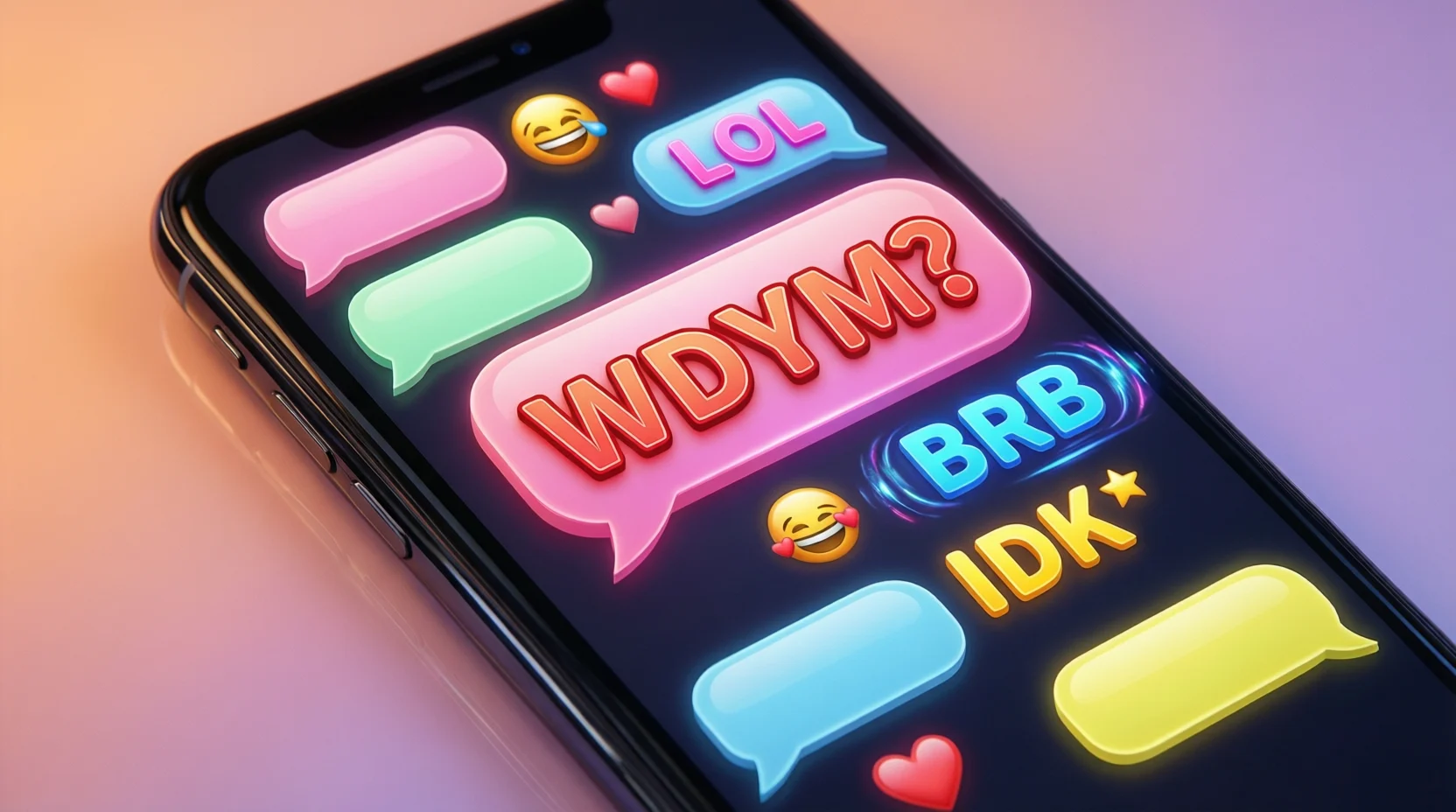
WDYM is just one abbreviation. There are many more. Knowing them helps you understand online chats better.
Here are some popular ones:
- LOL – Laugh out loud. Used when something is funny.
Example: “That joke made me LOL!” - BRB – Be right back. Used when leaving a chat for a short time.
Example: “BRB, I need water.” - IDK – I don’t know. Shows uncertainty or lack of knowledge.
Example: “IDK what to eat for dinner.” - SMH – Shaking my head. Shows disappointment or disbelief.
Example: “He forgot his homework again, SMH.” - TBH – To be honest. Shows honesty or truth.
Example: “TBH, I love this game!” - FTW – For the win. Shows approval or excitement.
Example: “Pizza for dinner, FTW!” - IMO / IMHO – In my opinion / In my humble opinion. Used to share thoughts.
Example: “IMO, chocolate ice cream is the best.”
Using these abbreviations together with WDYM makes chatting faster and more fun.
How to Respond to WDYM
When someone types WDYM, you need to explain clearly. Keep your sentences short. Be friendly.
Example 1:
Friend 1: “I am not coming to the party.”
Friend 2: “WDYM?”
Friend 1: “I feel sick and need to rest.”
Example 2:
Friend 1: “The movie was weird.”
Friend 2: “WDYM?”
Friend 1: “It had strange scenes that I did not understand.”
Clear answers help the conversation move smoothly.
Why Understanding Online Slang is Important
5.1 Enhances communication
If you know abbreviations like WDYM, LOL, and BRB, you understand friends faster. Chats feel easier.
5.2 Avoids misunderstanding
Sometimes, words can confuse people online. Using WDYM politely asks for clarification. You avoid wrong assumptions.
5.3 Keeps you social media savvy
Social media and texting change fast. New slang appears all the time. Learning abbreviations keeps you updated. You stay connected with friends and online trends.
Fun Tips to Learn More Slang
- Read social media posts.
- Join online groups or chats.
- Use a slang dictionary or website.
- Ask friends what new abbreviations mean.
- Practice using them in casual chats.
Learning slang can be fun. It helps you make friends and enjoy chatting.
Conclusion
WDYM is short for “What do you mean?” It is a casual abbreviation used online. People use it to ask for clarification. You can use it in texting, social media, or messaging apps. But do not use it in school essays or professional emails.
Other abbreviations like LOL, BRB, IDK, SMH, TBH, FTW, and IMO help make chatting fast and fun. Knowing them keeps you updated with online trends.
When someone types WDYM, give a clear and friendly answer. Add emojis if you want to keep the tone kind. Learning these slang terms improves communication. It avoids confusion and makes chatting fun.
Now you know WDYM and many other abbreviations. Use them wisely and enjoy your online conversations!
FAQs
Q1: What is the difference between WDYM and WYD?
- WDYM = What do you mean?
- WYD = What are you doing?
- They sound similar but mean very different things.
Q2: Can I use WDYM in professional messages?
- No. It is casual slang. Use full sentences in formal writing.
Q3: Are there regional differences in slang?
- Yes. Some abbreviations are more common in certain countries. But WDYM is widely understood online.
Q4: How do I respond to WDYM?
- Give a short and clear answer. Be polite.

William Jones is an American author known for his clear, engaging, and reader-friendly writing style. He enjoys turning everyday ideas into meaningful stories that are easy to understand and enjoyable to read. His work often focuses on simple language, strong metaphors, and practical lessons that connect directly with readers.
With a passion for storytelling, William believes that good writing doesn’t need to be complicated to be powerful. He aims to make ideas feel familiar, relatable, and memorable. Whether he’s explaining a concept, sharing a story, or exploring human behavior, his goal is always clarity and connection.
When he’s not writing, William enjoys reading classic literature, observing everyday life for inspiration, and helping readers see common things in a new way.