I want to talk to you like we’re sitting across from each other, maybe with a cup of tea between us. I’ve felt stress wrap itself around my days more times than I can count. I used to think stress was just “being busy.” But I learned something important.
Stress is easier to understand when we give it a picture. When I put words and images to how I feel, stress stops being a scary blur. It becomes something I can see, name, and slowly manage.
That’s why metaphors for stress matter so much. They turn invisible pressure into something real. Something we can talk about. Something we can handle. If you’ve ever felt tight, tired, or overwhelmed but didn’t know how to explain it, these metaphors will help you say exactly what’s going on inside.
20 Powerful Metaphors for Stress
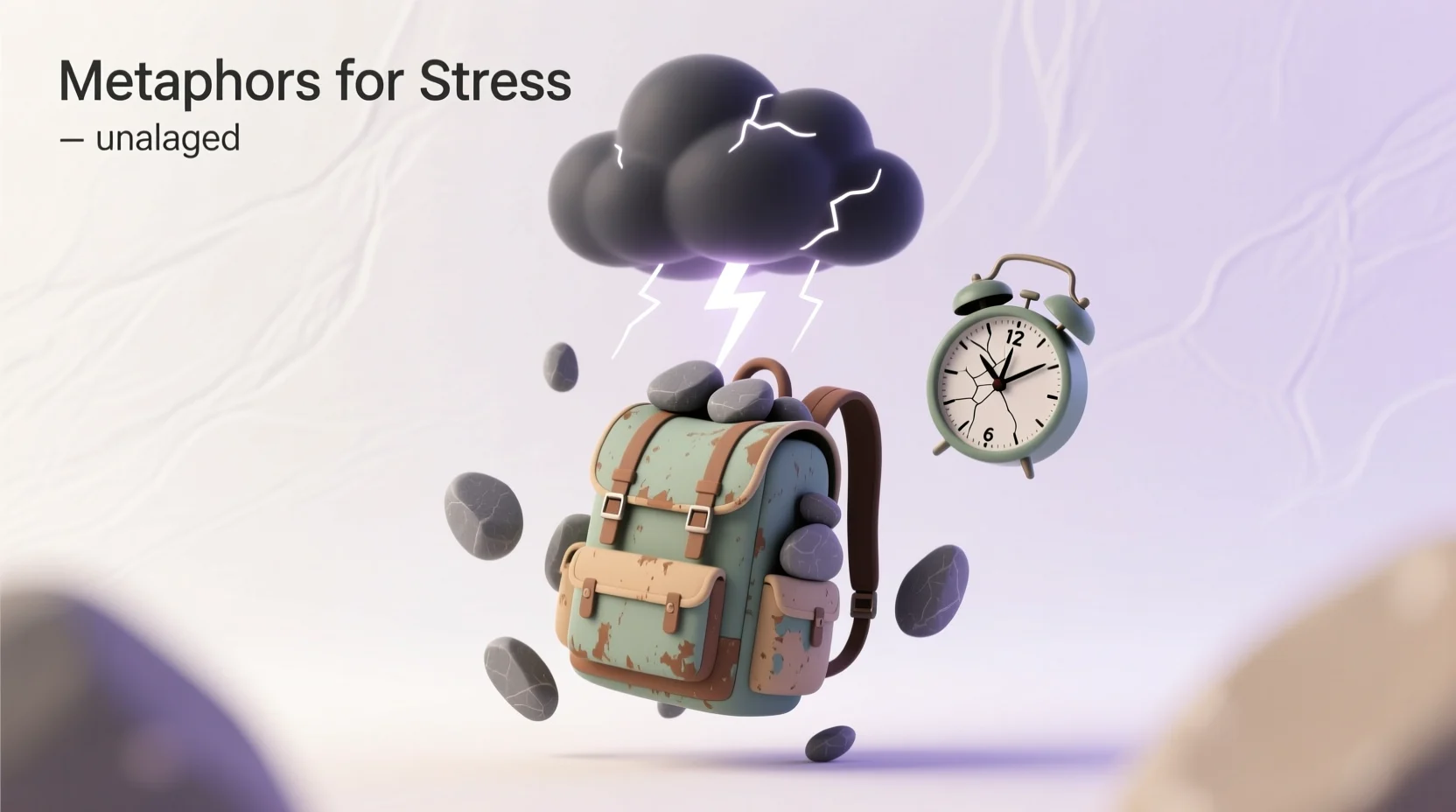
1. Stress is a heavy backpack
Meaning: Carrying too many responsibilities.
Explanation: Each worry adds weight until you feel exhausted.
Examples:
- I’m walking through life with stress like a heavy backpack on my shoulders.
- I need to unload this backpack before it breaks me.
2. Stress is a ticking clock
Meaning: Constant pressure from deadlines.
Explanation: Time feels like it’s always running out.
Examples:
- Stress ticks louder every time I look at the calendar.
- That ticking clock in my head never stops.
3. Stress is a tight knot
Meaning: Physical and emotional tension.
Explanation: Worries twist together and refuse to loosen.
Examples:
- Stress tied a tight knot in my stomach.
- I can feel that knot tighten when I overthink.
4. Stress is a storm cloud
Meaning: Emotional heaviness.
Explanation: It follows you and blocks the light.
Examples:
- A storm cloud of stress hangs over my day.
- Even happy moments feel shaded.
5. Stress is a boiling pot
Meaning: Suppressed emotions.
Explanation: Pressure builds until it spills over.
Examples:
- I felt like a boiling pot ready to overflow.
- One small thing made everything spill out.
6. Stress is a buzzing fly
Meaning: Persistent annoyance.
Explanation: Small worries that won’t leave you alone.
Examples:
- Stress buzzed in my mind all day.
- I couldn’t swat it away.
7. Stress is quicksand
Meaning: Feeling trapped.
Explanation: The harder you struggle, the deeper you sink.
Examples:
- The more I rushed, the deeper I sank into stress.
- Stress felt like quicksand around my legs.
8. Stress is a broken alarm
Meaning: Constant alert mode.
Explanation: Your body never gets to rest.
Examples:
- My stress alarm never turns off.
- Even at night, it keeps ringing.
9. Stress is a crowded room
Meaning: Mental overload.
Explanation: Too many thoughts at once.
Examples:
- My mind felt like a crowded room.
- Stress made it hard to breathe.
10. Stress is a stretched rubber band
Meaning: Being close to snapping.
Explanation: One more pull could break you.
Examples:
- I’m stretched thin by stress.
- One more demand might snap me.
11. Stress is a weight on the chest
Meaning: Anxiety and pressure.
Explanation: It makes breathing feel harder.
Examples:
- Stress sat heavy on my chest.
- Every breath felt forced.
12. Stress is a leaky faucet
Meaning: Constant drain.
Explanation: Small worries slowly exhaust you.
Examples:
- Stress dripped into my energy all day.
- By evening, I felt empty.
13. Stress is a maze
Meaning: Confusion.
Explanation: You don’t know which way leads out.
Examples:
- I wandered through a maze of stress.
- Every turn felt wrong.
14. Stress is static noise
Meaning: Mental distraction.
Explanation: It blocks clear thinking.
Examples:
- Stress filled my head with static.
- I couldn’t hear my own thoughts.
15. Stress is a sinking ship
Meaning: Losing control.
Explanation: Problems pile up quickly.
Examples:
- Stress made my day feel like a sinking ship.
- I was bailing water nonstop.
16. Stress is a tight schedule
Meaning: Time pressure.
Explanation: No room to breathe.
Examples:
- Stress packed my schedule too tight.
- There was no space left for rest.
17. Stress is a clenched jaw
Meaning: Unconscious tension.
Explanation: The body holds stress silently.
Examples:
- I noticed stress in my clenched jaw.
- Relaxing felt unfamiliar.
18. Stress is a fog
Meaning: Mental dullness.
Explanation: Everything feels unclear.
Examples:
- Stress wrapped my thoughts in fog.
- I couldn’t focus on anything.
19. Stress is an overfilled inbox
Meaning: Too many demands.
Explanation: Messages never stop coming.
Examples:
- My life felt like an overfilled inbox.
- Stress came faster than I could reply.
20. Stress is a tight rope
Meaning: Fear of slipping.
Explanation: One mistake feels dangerous.
Examples:
- I felt like I was walking a tight rope.
- Stress made every step scary.
Conclusion
I’ve learned that stress doesn’t disappear when we ignore it. It softens when we understand it. Metaphors give stress a voice. They help us explain what’s happening inside without shame or confusion. When you name your stress, you take power away from it. And that’s the first real step toward feeling lighter again.
Practical Exercise: Understanding Your Stress
Answer these honestly.
- What does stress feel like in your body?
Answer: Tension, fatigue, headaches, or tight breathing. - Which metaphor describes your stress best today?
Answer: The one that feels most real emotionally. - When does your stress feel strongest?
Answer: During deadlines or uncertainty. - What adds weight to your “backpack”?
Answer: Unfinished tasks and expectations. - What helps loosen the “knot”?
Answer: Deep breathing and pauses. - What keeps your alarm ringing?
Answer: Constant worry or lack of rest. - Where do you feel stuck like quicksand?
Answer: In situations without clear solutions. - What drains your energy like a leaky faucet?
Answer: Small repeated worries. - What clears your mental fog?
Answer: Rest, writing, or talking. - What’s one small step to ease stress today?
Answer: Slowing down and doing one thing at a time.

Daren Jones is an American author who writes about emotions, self-growth, and meaningful storytelling. His work focuses on explaining complex feelings in a simple and relatable way. Through his writing on Metaphare.com, he helps readers better understand their thoughts, manage emotions, and connect with ideas that inspire clarity and personal growth.