Let me be honest with you. I know that nervous feeling all too well. I’ve felt it before an exam, right before speaking up in a meeting, and even while sending a simple message that suddenly felt way too important.
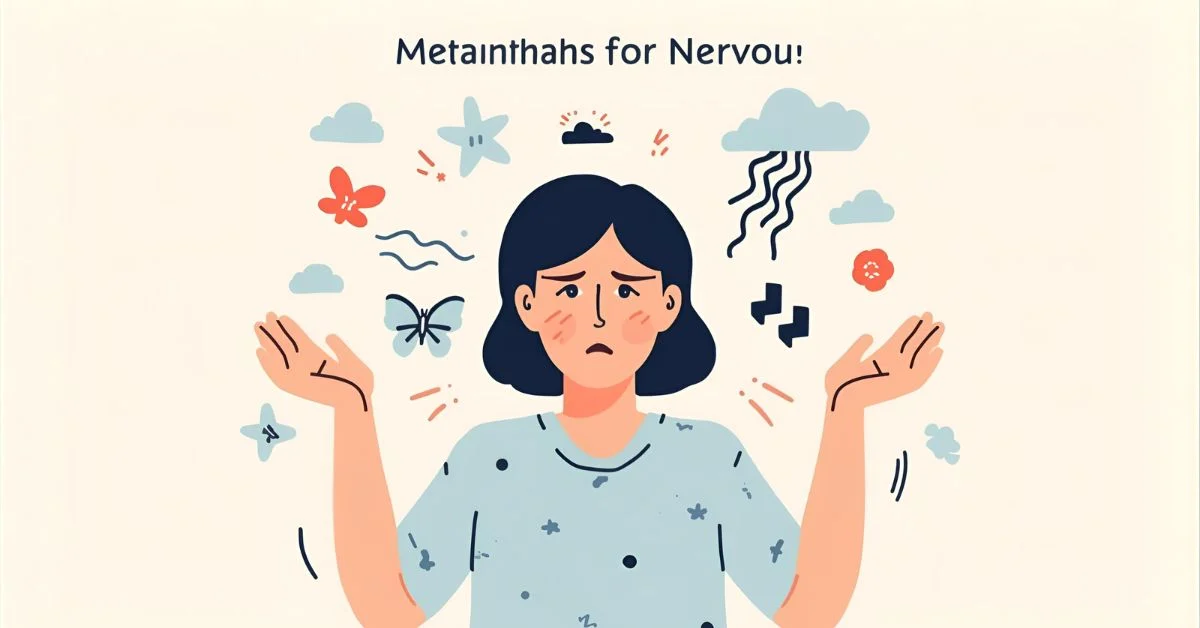
When words fail us, metaphors step in and do the heavy lifting. They help me explain nervousness in a way that feels real, vivid, and human. If you’ve ever struggled to describe that shaky, uneasy feeling, you’re in the right place.
In this guide, I’ll walk you through 20 metaphors for nervous, each explained clearly with meanings and examples you can actually use in writing, speaking, or daily conversation.
1. My stomach was full of butterflies
Meaning: Feeling anxious or uneasy.
Explanation: Butterflies flutter unpredictably, just like nervous feelings.
Examples:
- My stomach was full of butterflies before the interview.
- She felt butterflies when her name was called.
2. My nerves were live wires
Meaning: Extremely tense or alert.
Explanation: Live wires suggest danger and constant energy.
Examples:
- My nerves were live wires waiting for the result.
- His voice shook like a live wire under pressure.
3. I felt like a cat on a hot tin roof
Meaning: Unable to relax due to nervousness.
Explanation: The image suggests restlessness and discomfort.
Examples:
- I was a cat on a hot tin roof before my turn.
- She paced like a cat on a hot tin roof.
4. My heart was a racing engine
Meaning: Rapid heartbeat due to anxiety.
Explanation: Engines race when pushed hard, like nerves under stress.
Examples:
- My heart was a racing engine during the test.
- His chest felt like a racing engine.
5. My thoughts were tangled wires
Meaning: Confused and nervous thinking.
Explanation: Tangled wires reflect mental chaos.
Examples:
- My thoughts were tangled wires before speaking.
- Stress turned her thoughts into tangled wires.
6. I felt like a leaf in the wind
Meaning: Feeling shaky and uncertain.
Explanation: A leaf moves uncontrollably, like nervous hands.
Examples:
- I was a leaf in the wind on stage.
- His hands shook like a leaf in the wind.
7. My voice trembled like thin glass
Meaning: Speaking with fear or anxiety.
Explanation: Thin glass breaks easily, just like shaky confidence.
Examples:
- My voice trembled like thin glass.
- Her words sounded like fragile glass.
8. My chest was a trapped bird
Meaning: Nervous energy struggling to escape.
Explanation: A trapped bird beats wildly, symbolizing anxiety.
Examples:
- My chest felt like a trapped bird.
- His breath fluttered like a trapped bird.
9. I was walking on eggshells
Meaning: Acting carefully due to nervousness.
Explanation: Eggshells break easily, creating tension.
Examples:
- I walked on eggshells during the meeting.
- She spoke carefully, like on eggshells.
10. My nerves were stretched strings
Meaning: Feeling close to snapping.
Explanation: Tight strings break under pressure.
Examples:
- My nerves were stretched strings before the call.
- His patience felt like stretched strings.
11. My stomach was a knotted rope
Meaning: Tight nervous feeling.
Explanation: Knots suggest tension and discomfort.
Examples:
- My stomach was a knotted rope.
- Anxiety tied his stomach in knots.
12. I felt like a balloon about to pop
Meaning: Overwhelmed with nervous energy.
Explanation: Balloons burst when pressure builds.
Examples:
- I felt like a balloon about to pop.
- Stress made her feel ready to burst.
13. My hands were icy stones
Meaning: Fear causing cold hands.
Explanation: Nervousness can reduce warmth.
Examples:
- My hands were icy stones.
- His palms felt like cold stones.
14. My mind was a stormy sky
Meaning: Chaotic and anxious thoughts.
Explanation: Storms reflect inner turmoil.
Examples:
- My mind was a stormy sky.
- Her thoughts thundered like a storm.
15. I felt like a deer in headlights
Meaning: Frozen with nervous fear.
Explanation: Deer freeze when startled.
Examples:
- I stood like a deer in headlights.
- He froze, a deer in headlights.
16. My breath came in short waves
Meaning: Nervous, shallow breathing.
Explanation: Anxiety disrupts breathing rhythm.
Examples:
- My breath came in short waves.
- Fear made her breathing uneven.
17. My legs were jelly
Meaning: Weak from nervousness.
Explanation: Jelly lacks strength and stability.
Examples:
- My legs were jelly on stage.
- His knees felt like jelly.
18. My confidence cracked like ice
Meaning: Sudden loss of confidence.
Explanation: Ice breaks under pressure.
Examples:
- My confidence cracked like ice.
- Her bravery shattered like thin ice.
19. My nerves buzzed like bees
Meaning: Constant anxious energy.
Explanation: Bees buzz nonstop, like nervous thoughts.
Examples:
- My nerves buzzed like bees.
- His body hummed with tension.
20. I felt wound like a tight spring
Meaning: Highly tense and anxious.
Explanation: Springs snap when released.
Examples:
- I felt wound like a tight spring.
- She stayed coiled with anxiety.
Conclusion
Nervousness is something we all experience, but describing it doesn’t have to be difficult. I’ve found that metaphors make emotions clearer, stronger, and easier to relate to. Whether you’re writing creatively, speaking confidently, or just trying to explain how you feel, these metaphors give you the words when plain language falls short.
Practical Exercise: Test Your Understanding
Q1. Which metaphor fits exam anxiety best?
Answer: Butterflies in the stomach
Q2. What metaphor suggests confusion?
Answer: Tangled wires
Q3. Which metaphor shows physical weakness?
Answer: Legs were jelly
Q4. What metaphor means frozen fear?
Answer: Deer in headlights
Q5. Which metaphor shows pressure building?
Answer: Balloon about to pop
Q6. What metaphor fits shallow breathing?
Answer: Short waves of breath
Q7. Which one means emotional tension?
Answer: Stretched strings
Q8. What metaphor shows restless anxiety?
Answer: Cat on a hot tin roof
Q9. Which describes mental chaos?
Answer: Stormy sky
Q10. What metaphor shows nervous energy?
Answer: Buzzing bees

James Wallet is a writer who focuses on emotional clarity, self-improvement, and practical insights. His writing style is direct, relatable, and easy to follow. Through his work on Metaphare.com, James aims to help readers better understand their emotions and build a healthier mindset.James Wallet is a writer who focuses on emotional clarity, self-improvement, and practical insights. His writing style is direct, relatable, and easy to follow. Through his work on Metaphare.com, James aims to help readers better understand their emotions and build a healthier mindset.