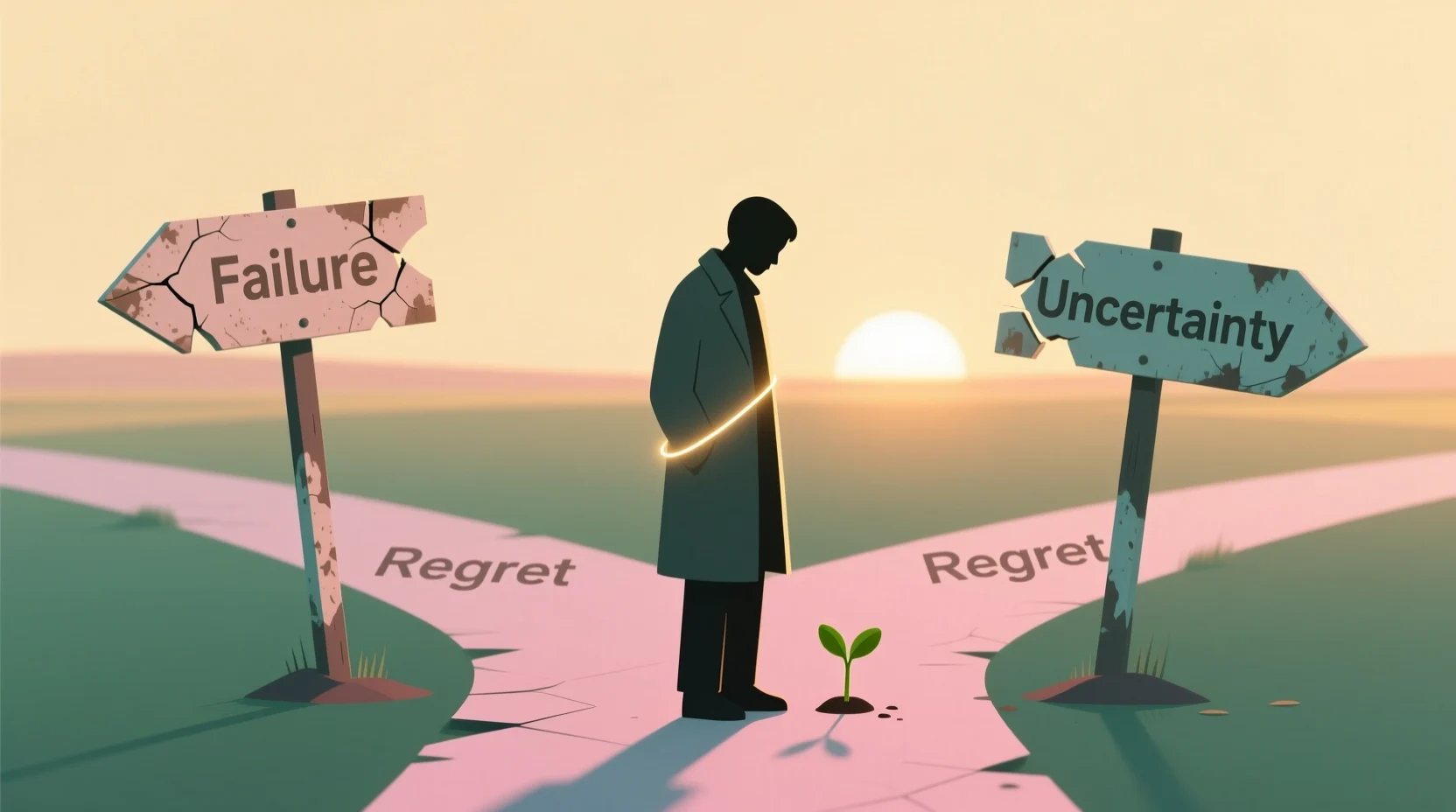
I remember a time when failure stopped me in my tracks. I had plans. I had confidence. And then, suddenly, everything fell apart. I failed. It’s a small word, but it carries a lot of weight. In that moment, I felt like I was a broken pencil still there, but useless for writing anything new. I kept asking myself, “Was I not good enough?”
But after sitting with that feeling, I noticed something important. I was still standing. I was shaken, yes, but I wasn’t finished. I decided to treat my failure like a teacher, not a judge. I listened instead of running from it.
I learned instead of blaming myself. Slowly, I realized that failure is not the end of the road; it’s just a pause. Like a red traffic light it stops you for a moment, but the journey continues.
In this story, I want to walk with you through metaphors that explain what failure really feels like and what it can become.
I’ve been there. I’ve carried that weight. And I’ve learned how to handle it not with fear, but with understanding. If you’ve ever felt like you failed, then this conversation is for both of us.
20 Metaphors for Failure
1. Failure is a Dead-End Road
Meaning: Reaching a point where progress stops
Explanation: It feels final, but it often forces a new direction.
Examples:
- My plan felt like a dead-end road with no signs forward.
- That project ended in a dead-end road, so I turned back wiser.
2. Failure is Falling Flat on Your Face
Meaning: A very visible or embarrassing mistake
Explanation: Painful, but it gets attention and learning.
Examples:
- I fell flat on my face during that presentation.
- The launch failed, and I hit the ground hard.
3. Failure is a Missed Train
Meaning: Losing an important opportunity
Explanation: Timing was off, not ability.
Examples:
- I missed the train on that opportunity.
- It felt like watching the doors close as I ran.
4. Failure is a Broken Compass
Meaning: Losing direction or clarity
Explanation: You’re moving, but not where you meant to go.
Examples:
- My plan failed because my compass was broken.
- I followed the wrong direction for too long.
5. Failure is a Cracked Mirror
Meaning: A damaged self-image
Explanation: You don’t see yourself the same afterward.
Examples:
- That failure cracked the mirror I saw myself in.
- I had to rebuild how I saw myself.
6. Failure is a House Built on Sand
Meaning: Weak foundations
Explanation: The idea wasn’t stable from the start.
Examples:
- The business failed because it stood on sand.
- I rushed and skipped the foundation.
7. Failure is Dropping the Ball
Meaning: Making a careless mistake
Explanation: Often unintentional but costly.
Examples:
- I dropped the ball when it mattered most.
- One small slip caused a big loss.
8. Failure is a Leaking Boat
Meaning: Slow, ongoing problems
Explanation: Ignored issues eventually sink things.
Examples:
- The project failed like a boat full of leaks.
- I kept bailing water instead of fixing the hole.
9. Failure is a Burnt Cake
Meaning: Something ruined by poor timing or judgment
Explanation: Too much or too little effort.
Examples:
- I overdid it and burnt the cake.
- The idea was good, but the execution wasn’t.
10. Failure is a Closed Door
Meaning: An opportunity denied
Explanation: Often makes space for another door.
Examples:
- That rejection was a closed door.
- I knocked, but it never opened.
11. Failure is Tripping Over Your Own Feet
Meaning: Self-sabotage
Explanation: Your actions got in your own way.
Examples:
- I tripped over my own feet.
- Fear caused me to mess it up.
12. Failure is a Storm Without Shelter
Meaning: Feeling overwhelmed
Explanation: You weren’t prepared emotionally.
Examples:
- The failure hit like a storm.
- I had nowhere to hide from it.
13. Failure is a Jammed Engine
Meaning: Progress suddenly stops
Explanation: Something essential isn’t working.
Examples:
- My motivation stalled like a jammed engine.
- I couldn’t move forward no matter how hard I tried.
14. Failure is a Puzzle Missing Pieces
Meaning: Incomplete understanding
Explanation: You didn’t have all the information.
Examples:
- The plan failed because pieces were missing.
- I tried to force the picture anyway.
15. Failure is Carrying a Broken Ladder
Meaning: Using the wrong tools
Explanation: Effort alone isn’t enough.
Examples:
- I climbed with a broken ladder.
- No wonder I didn’t reach the top.
16. Failure is Running in Place
Meaning: Effort without results
Explanation: You’re busy but not progressing.
Examples:
- I ran hard but stayed in the same spot.
- The work felt endless and pointless.
17. Failure is a Flat Tire
Meaning: A sudden setback
Explanation: Temporary but frustrating.
Examples:
- My progress stopped with a flat tire.
- I had to pull over and fix it.
18. Failure is a Missed Step on the Stairs
Meaning: A small mistake with impact
Explanation: One wrong move changes everything.
Examples:
- I missed a step and stumbled.
- It threw off my balance.
19. Failure is an Unfinished Sentence
Meaning: A story not yet complete
Explanation: It’s not the end just a pause.
Examples:
- That failure was an unfinished sentence.
- I hadn’t written the ending yet.
20. Failure is a Teacher in Disguise
Meaning: A hidden lesson
Explanation: Painful now, useful later.
Examples:
- Failure taught me more than success ever did.
- I learned what not to do next time.
Conclusion
Failure isn’t a label it’s an experience. When I stopped seeing failure as proof that I wasn’t good enough and started seeing it as information, everything changed. Metaphors help us talk about failure without drowning in it.
They turn pain into language, and language into understanding. If you can name it, you can face it. And if you can face it, you can move forward.
Practical Exercise
- Q: What metaphor best describes your last failure?
A: The one that feels most honest. - Q: What did that failure teach you?
A: A lesson about timing, preparation, or mindset. - Q: Was it a sudden failure or a slow one?
A: Identifying this helps prevent repeats. - Q: Did fear play a role?
A: Often, yes. - Q: What part was in your control?
A: Focus on that part. - Q: What would you do differently now?
A: That’s growth. - Q: Did you ignore warning signs?
A: Awareness comes from reflection. - Q: How did you talk to yourself afterward?
A: Self-talk matters. - Q: What metaphor gives you hope?
A: “An unfinished sentence.” - Q: Are you willing to try again?
A: That’s the real success.

James Wallet is a writer who focuses on emotional clarity, self-improvement, and practical insights. His writing style is direct, relatable, and easy to follow. Through his work on Metaphare.com, James aims to help readers better understand their emotions and build a healthier mindset.James Wallet is a writer who focuses on emotional clarity, self-improvement, and practical insights. His writing style is direct, relatable, and easy to follow. Through his work on Metaphare.com, James aims to help readers better understand their emotions and build a healthier mindset.