I still remember the day I felt completely stuck while helping a child with homework. The words were there, but the meaning was not clear, and no matter how normally I explained things, the child looked confused.
Then I said, “Your mind is like a sponge,” and suddenly the child smiled. That was the moment I understood something important: children do not always learn through big explanations; they learn through pictures made with words.
They learn through metaphors. I started using simple metaphors in my talks, and guess what? The child began understanding faster. I realized the issue was not intelligence but how I explained things.
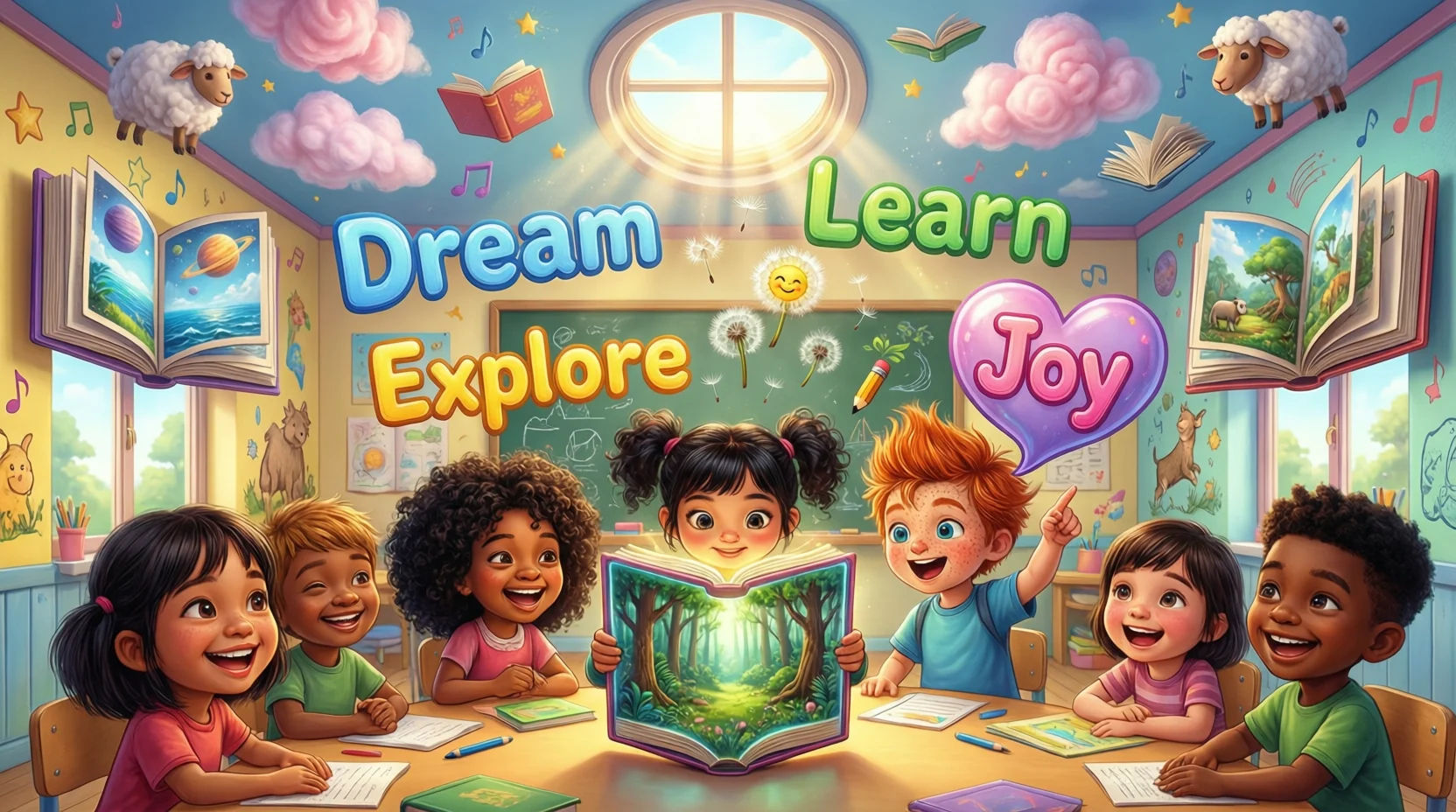
When I changed my words, everything changed. That is why I am here, talking to you. I want to show you how metaphors can help children learn easily. In this post, I will share simple metaphors for children, each one easy to understand and each one turning learning into a small story.
20 Metaphors for Children
1. The classroom was a zoo.
Meaning:
The classroom was noisy and busy.
Explanation:
A zoo is loud and full of movement.
This metaphor compares a loud class to a zoo.
Examples:
- When everyone talked at once, the classroom was a zoo.
- During group work, the room turned into a zoo.
2. My backpack is a rock.
Meaning:
The backpack is very heavy.
Explanation:
A rock is heavy.
The backpack feels just as heavy.
Examples:
- My backpack is a rock after school.
- Books made my bag a rock on my shoulders.
3. Time is a thief.
Meaning:
Time passes quickly without us noticing.
Explanation:
A thief takes things quietly.
Time takes moments away the same way.
Examples:
- Time is a thief during holidays.
- Time is a thief when I play games.
4. Her smile is sunshine.
Meaning:
Her smile makes people happy.
Explanation:
Sunshine makes days bright.
A smile can brighten moods.
Examples:
- Her smile is sunshine in class.
- Mom’s smile is sunshine at home.
5. The test was a monster.
Meaning:
The test was very difficult.
Explanation:
A monster feels scary and big.
The test felt the same.
Examples:
- The math test was a monster.
- Exams can feel like monsters.
6. My brother is a walking alarm clock.

Meaning:
He wakes people up early.
Explanation:
An alarm clock makes noise.
The brother does the same.
Examples:
- My brother is a walking alarm clock.
- She is a walking alarm clock every morning.
7. The night was a blanket.
Meaning:
The night felt calm and safe.
Explanation:
A blanket gives comfort.
Night felt comforting too.
Examples:
- The night was a blanket of peace.
- Stars made the night a soft blanket.
8. Books are windows.
Meaning:
Books help us see new ideas and worlds.
Explanation:
Windows help us see outside.
Books help us see more of life.
Examples:
- Books are windows to knowledge.
- Stories are windows to new places.
9. His words were ice.
Meaning:
His words were unkind.
Explanation:
Ice feels cold.
Mean words feel cold too.
Examples:
- His words were ice today.
- Angry words can be ice.
10. The playground was an ocean.
Meaning:
The playground was full of children.
Explanation:
An ocean is wide and full.
The playground looked the same.
Examples:
- The playground was an ocean of kids.
- Recess turned the yard into an ocean.
11. Homework is a mountain.
Meaning:
There is a lot of homework.
Explanation:
A mountain is big and hard to climb.
Homework feels that way.
Examples:
- Homework is a mountain today.
- Math homework felt like a mountain.
12. Her voice is music.
Meaning:
Her voice sounds pleasant.
Explanation:
Music sounds nice.
Her voice does too.
Examples:
- Her voice is music to my ears.
- The teacher’s voice is music.
13. The baby is a tornado.
Meaning:
The baby is very active.
Explanation:
A tornado moves fast.
So does the baby.
Examples:
- The baby is a tornado at home.
- Toddlers can be tornadoes.
14. The road was a ribbon.
Meaning:
The road was long and winding.
Explanation:
A ribbon twists and stretches.
The road looked the same.
Examples:
- The road was a ribbon through hills.
- That road is a ribbon of gray.
15. Fear is a shadow.
Meaning:
Fear follows quietly.
Explanation:
A shadow stays close.
Fear can stay close too.
Examples:
- Fear is a shadow at night.
- Worries become shadows.
16. The bell was a lion.
Meaning:
The bell was very loud.
Explanation:
A lion roars loudly.
So did the bell.
Examples:
- The bell was a lion today.
- School bells can be lions.
17. His mind is a sponge.
Meaning:
He learns very fast.
Explanation:
A sponge absorbs water.
His mind absorbs knowledge.
Examples:
- His mind is a sponge in class.
- Children’s minds are sponges.
18. The clouds were cotton.
Meaning:
The clouds looked soft.
Explanation:
Cotton looks fluffy.
The clouds looked the same.
Examples:
- Clouds were cotton in the sky.
- The sky was full of cotton clouds.
19. Anger is fire.
Meaning:
Anger can grow quickly.
Explanation:
Fire spreads fast.
Anger does too.
Examples:
- Anger is fire if not controlled.
- His anger burned like fire.
20. Friendship is glue.
Meaning:
Friendship keeps people together.
Explanation:
Glue sticks things together.
Friendship bonds people.
Examples:
- Friendship is glue in life.
- True friends are glue.
Conclusion
Metaphors don’t have to be hard.
For children, they should be simple, visual, and fun.
When kids understand metaphors, their reading and writing improve.
They learn to express feelings better.
Start small.
Use everyday things.
And soon, metaphors will feel natural to them.
Practical Exercise: Practice Metaphors
Questions & Answers
- Q: What does Time is a thief mean?
A: Time passes quickly. - Q: Her smile is sunshine shows what?
A: Happiness. - Q: What does Homework is a mountain mean?
A: Homework is a lot. - Q: Books are windows means?
A: Books teach us new things. - Q: What does His words were ice show?
A: Unkind words. - Q: The baby is a tornado means?
A: Very active. - Q: What does Fear is a shadow mean?
A: Fear follows quietly. - Q: The bell was a lion shows?
A: Loud sound. - Q: His mind is a sponge means?
A: He learns fast. - Q: “Friendship is glue” means?
A: Friends stay together.

James Wallet is a writer who focuses on emotional clarity, self-improvement, and practical insights. His writing style is direct, relatable, and easy to follow. Through his work on Metaphare.com, James aims to help readers better understand their emotions and build a healthier mindset.James Wallet is a writer who focuses on emotional clarity, self-improvement, and practical insights. His writing style is direct, relatable, and easy to follow. Through his work on Metaphare.com, James aims to help readers better understand their emotions and build a healthier mindset.