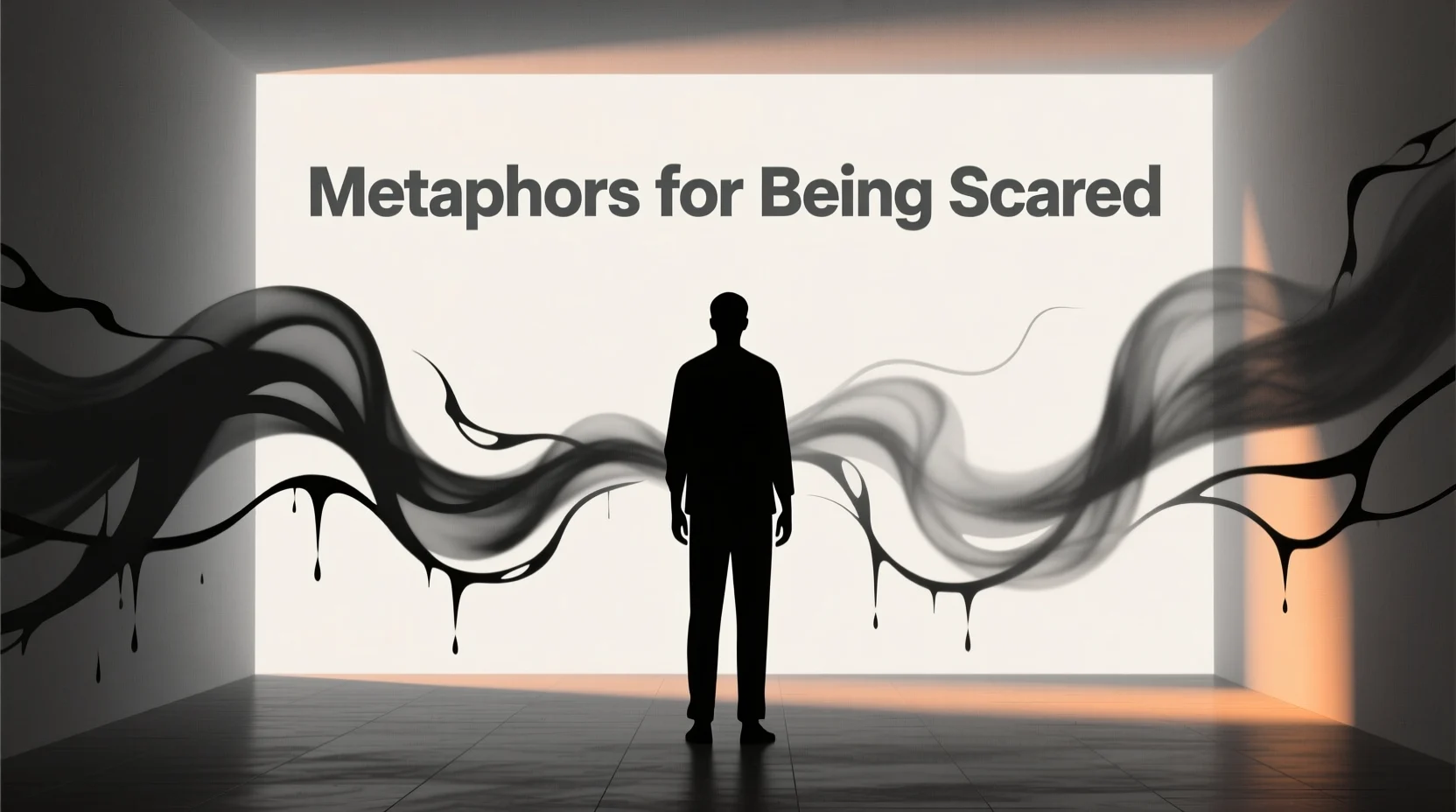
I still remember the first time fear really sat with me. Not the quick jump-scare kind, but the slow, quiet fear that sneaks in and refuses to leave. I was standing there, pretending everything was fine, while inside my chest felt tight and noisy. I didn’t know how to explain it to anyone. All I could say was, “I’m scared,” but that word felt too small for what I was feeling.
That’s when I realized something important. Fear doesn’t always listen to plain words. When I tried to explain it using metaphors, everything changed. I started saying things like “it felt like my heart was a trapped bird” or “my thoughts were running like scared children in the dark.” Suddenly, people understood me better and more importantly, I understood myself.
I’m telling you this because I know what it’s like to feel scared and not know how to say it out loud. I’ve been there. I’ve felt my courage shrink and my confidence hide. But learning metaphors helped me face that fear, name it, and slowly handle it instead of letting it control me.
So if you’ve ever felt fear sitting heavy in your chest or racing through your mind, you’re not alone. In this guide, I’ll share metaphors for being scared that helped me and might help you too turn confusing feelings into clear, powerful words.
20 Metaphors for Being Scared
1. Fear wrapped around me like a cold blanket
Meaning: Fear felt heavy and inescapable
Explanation: This metaphor shows fear as something that covers and traps you.
Examples:
- Fear wrapped around me like a cold blanket when I heard the news.
- In that dark room, fear wrapped around me like a cold blanket.
2. My heart was a trapped bird
Meaning: Extreme nervousness or panic
Explanation: A trapped bird flaps wildly, just like a scared heart.
Examples:
- My heart was a trapped bird as I waited for my name.
- When the door slammed, my heart became a trapped bird.
3. Fear crept in like a shadow
Meaning: Fear arrived slowly and quietly
Explanation: Shadows move without sound, just like subtle fear.
Examples:
- Fear crept in like a shadow as the night grew silent.
- As doubts grew, fear crept in like a shadow.
4. My stomach dropped like a falling elevator
Meaning: Sudden fear or shock
Explanation: It captures that instant, sinking feeling.
Examples:
- My stomach dropped like a falling elevator when I saw the message.
- The scream made my stomach drop like a falling elevator.
5. Fear tightened its grip on me
Meaning: Fear became stronger and harder to escape
Explanation: Fear is shown as something physically holding you.
Examples:
- Fear tightened its grip on me before I spoke.
- As the storm grew louder, fear tightened its grip.
6. I was frozen like a statue
Meaning: Too scared to move or speak
Explanation: Fear can stop the body completely.
Examples:
- I was frozen like a statue when I heard footsteps.
- Fear froze me like a statue on stage.
7. Fear buzzed in my head like angry bees
Meaning: Anxious, racing thoughts
Explanation: Shows mental chaos caused by fear.
Examples:
- Fear buzzed in my head like angry bees before the exam.
- The silence made fear buzz in my head.
8. My breath felt stolen
Meaning: Fear caused breathlessness
Explanation: Fear can feel suffocating.
Examples:
- When I saw the accident, my breath felt stolen.
- Fear stole my breath in that moment.
9. Fear sat on my chest
Meaning: Heavy emotional fear
Explanation: Commonly used for deep anxiety.
Examples:
- Fear sat on my chest all night.
- As the call rang, fear sat on my chest.
10. My knees turned to jelly
Meaning: Physical weakness from fear
Explanation: Fear affects the body instantly.
Examples:
- My knees turned to jelly before I walked in.
- Fear made my knees jelly-soft.
11. Fear whispered worst-case stories
Meaning: Fear caused negative thinking
Explanation: Shows fear as a voice in your mind.
Examples:
- Fear whispered worst-case stories in my ear.
- At night, fear whispered lies.
12. I felt like prey in the wild
Meaning: Feeling hunted or vulnerable
Explanation: Fear puts you in survival mode.
Examples:
- Walking alone, I felt like prey in the wild.
- Fear made me feel hunted.
13. Fear pulled the ground from under me
Meaning: Sudden emotional shock
Explanation: Shows loss of stability.
Examples:
- The news pulled the ground from under me.
- Fear knocked my balance away.
14. My mind became a storm
Meaning: Overwhelming fear and thoughts
Explanation: Storms show chaos and intensity.
Examples:
- My mind became a storm before the interview.
- Fear turned my thoughts into thunder.
15. Fear locked my voice
Meaning: Unable to speak from fear
Explanation: Fear can silence you.
Examples:
- Fear locked my voice mid-sentence.
- When asked, fear locked my words.
16. Fear crawled under my skin
Meaning: Deep, uncomfortable fear
Explanation: Shows fear as invasive.
Examples:
- The noise made fear crawl under my skin.
- Fear stayed with me all day.
17. I was standing on the edge of a cliff
Meaning: Feeling extreme fear or risk
Explanation: Suggests danger and uncertainty.
Examples:
- Making that choice felt like a cliff edge.
- Fear kept me frozen at the edge.
18. Fear shook me like an earthquake
Meaning: Powerful, uncontrollable fear
Explanation: Earthquakes represent loss of control.
Examples:
- Fear shook me when I heard the crash.
- The thought alone shook me.
19. My thoughts ran in circles
Meaning: Anxious overthinking
Explanation: Fear traps the mind.
Examples:
- Fear made my thoughts run in circles.
- All night, my thoughts raced.
20. Fear dimmed the world
Meaning: Fear removed joy and clarity
Explanation: Fear changes perception.
Examples:
- Fear dimmed the world around me.
- Everything felt darker with fear.
Conclusion
Fear doesn’t disappear when you name it but it does become lighter. I’ve learned that when I describe my fear clearly, it stops controlling me. Metaphors turn fear into something I can understand, share, and manage. If you’re scared right now, try putting it into words. You might be surprised how strong you feel afterward.
Practical Exercise: Practice Using Metaphors for Fear
Questions & Answers
- Q: Why use metaphors for fear?
A: They help express emotions clearly. - Q: Can metaphors reduce fear?
A: Yes, naming fear often lessens it. - Q: Which metaphor suits sudden fear best?
A: Stomach dropped like a falling elevator. - Q: Which metaphor fits anxiety?
A: Fear buzzed like angry bees. - Q: Can metaphors be used in writing?
A: Absolutely, they improve storytelling. - Q: Are metaphors useful in daily talk?
A: Yes, they make feelings relatable. - Q: Can kids use these metaphors?
A: Yes, with simple explanations. - Q: Do metaphors help emotional control?
A: They increase self-awareness. - Q: Should metaphors be overused?
A: No, use them naturally. - Q: What’s the first step to using metaphors?
- A: Notice how fear feels in your body.

William Jones is an American author known for his clear, engaging, and reader-friendly writing style. He enjoys turning everyday ideas into meaningful stories that are easy to understand and enjoyable to read. His work often focuses on simple language, strong metaphors, and practical lessons that connect directly with readers.
With a passion for storytelling, William believes that good writing doesn’t need to be complicated to be powerful. He aims to make ideas feel familiar, relatable, and memorable. Whether he’s explaining a concept, sharing a story, or exploring human behavior, his goal is always clarity and connection.
When he’s not writing, William enjoys reading classic literature, observing everyday life for inspiration, and helping readers see common things in a new way.