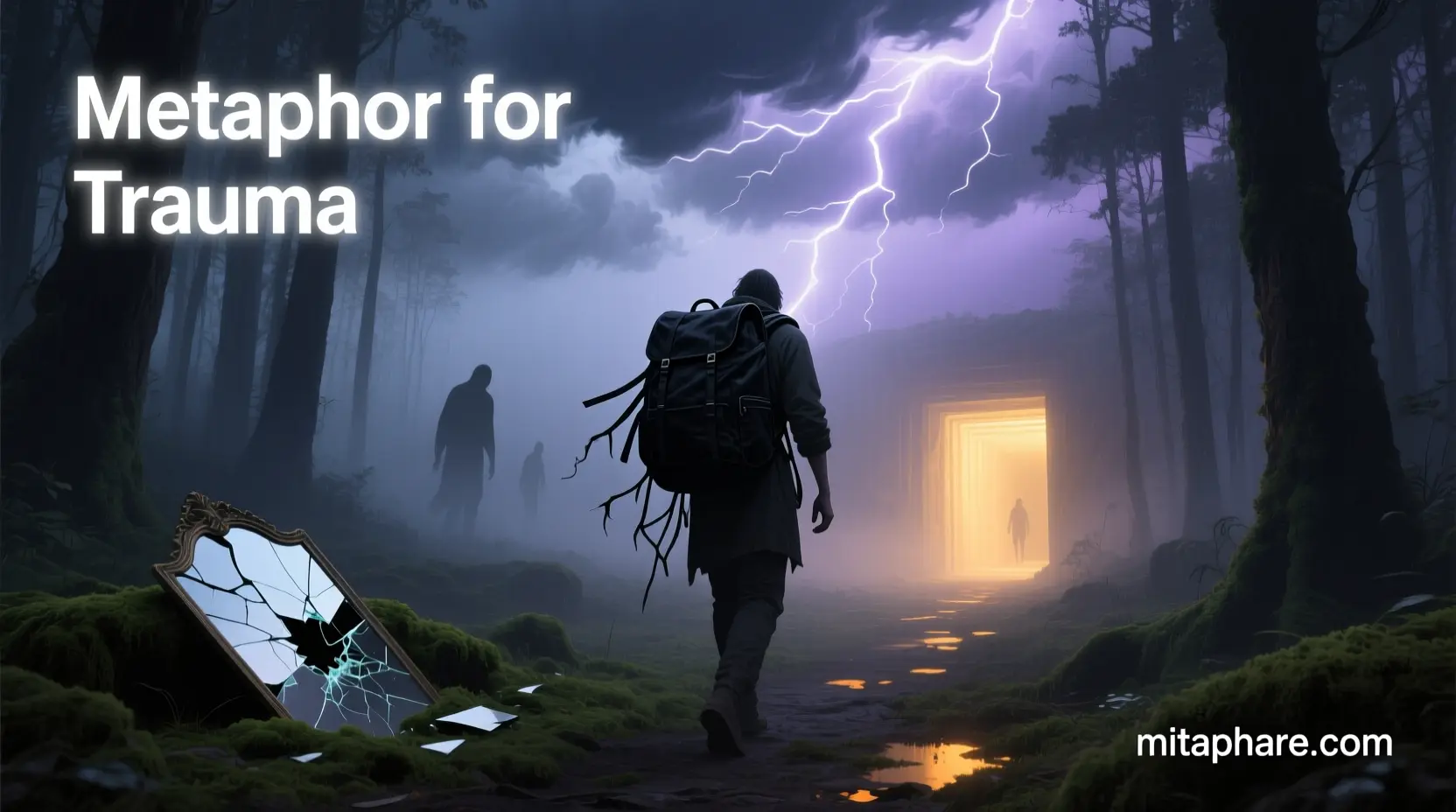
Hey, let’s talk about something heavy but important—trauma. We all experience pain in life, sometimes big, sometimes small, and it can leave marks we can’t always see. Talking about it isn’t easy, but words can help. One way to understand trauma is through metaphors. Metaphors let us describe feelings that are hard to put into plain words. Today, I’ll share 20 metaphors for trauma, explain what they mean, and show examples you can relate to. By the end, you’ll have a better way to understand your pain—or someone else’s—through language.
20 Metaphors for Trauma
1. Trauma is a storm
- Meaning: Sudden, intense, and overwhelming experiences.
- Explanation: Just like a storm, trauma can shake your world and leave things in disarray.
- Examples:
- Losing her home was a storm that left her life in chaos.
- His sudden loss hit him like a violent storm.
2. Trauma is a shadow
- Meaning: A lingering presence that follows you.
- Explanation: Trauma doesn’t always disappear; it quietly affects your life.
- Examples:
- The shadow of her past still made her anxious.
- He couldn’t escape the shadow of that tragic event.
3. Trauma is a wound
- Meaning: Pain that needs care and time to heal.
- Explanation: Just like a physical wound, emotional trauma can hurt long after the event.
- Examples:
- His harsh childhood left a wound that never fully healed.
- The betrayal felt like a wound to her heart.
4. Trauma is a heavy backpack
- Meaning: Carrying emotional weight everywhere.
- Explanation: Trauma adds invisible burden, making life harder.
- Examples:
- She carried her trauma like a backpack full of stones.
- Each failure added another stone to his heavy backpack.
5. Trauma is a locked door
- Meaning: Blocks you from moving forward.
- Explanation: Trauma can prevent you from feeling safe or trusting others.
- Examples:
- Trauma built a locked door around her heart.
- He felt trapped behind the locked door of past mistakes.
6. Trauma is fire
- Meaning: Consumes and transforms everything it touches.
- Explanation: Trauma can burn away innocence, but sometimes it clears space for growth.
- Examples:
- Losing his job was a fire that destroyed his confidence.
- The fire of betrayal changed her outlook on life.
7. Trauma is a deep ocean
- Meaning: Vast, hidden, and overwhelming.
- Explanation: Feelings can be intense and unpredictable, like waves in the ocean.
- Examples:
- His grief was an ocean too deep to navigate alone.
- The trauma pulled her under like waves in a stormy sea.
8. Trauma is a broken mirror
- Meaning: Distorted self-image or perception.
- Explanation: Trauma can make you see yourself differently, sometimes fractured.
- Examples:
- After the accident, he felt like a broken mirror reflecting fear.
- Her self-esteem shattered like a broken mirror.
9. Trauma is a cage
- Meaning: Feeling trapped or restricted.
- Explanation: Trauma can make it hard to feel free or live fully.
- Examples:
- Childhood abuse left her in a cage of fear.
- The memories kept him caged in regret.
10. Trauma is a stormy cloud
- Meaning: Dark, persistent, and ever-present.
- Explanation: It can hover over your life, even on sunny days.
- Examples:
- A stormy cloud of anxiety followed him everywhere.
- Her trauma hung over her like a stormy cloud.
11. Trauma is a thorn
- Meaning: Sharp, painful, and hard to remove.
- Explanation: Traumatic experiences can hurt for a long time.
- Examples:
- His past was a thorn that pierced his every decision.
- The betrayal left a thorn in her heart.
12. Trauma is a maze
- Meaning: Confusing and hard to navigate.
- Explanation: Moving through trauma can feel like finding your way in a maze.
- Examples:
- He wandered through a maze of memories, unsure where to turn.
- Healing from trauma felt like a long, winding maze.
13. Trauma is a shadowy forest
- Meaning: Dark, mysterious, and scary.
- Explanation: You may feel lost or unsafe, unsure of what’s ahead.
- Examples:
- Her mind was a shadowy forest after the accident.
- He wandered the shadowy forest of grief alone.
14. Trauma is a chain
- Meaning: Restricting freedom and movement.
- Explanation: Emotional trauma can hold you back in life.
- Examples:
- The chain of past mistakes weighed him down.
- Childhood trauma was a chain around her spirit.
15. Trauma is a crack in glass
- Meaning: Fragility and potential breakage.
- Explanation: Trauma can make you feel fragile and vulnerable.
- Examples:
- Her confidence had a crack like fragile glass.
- The accident left a crack in his emotional stability.
16. Trauma is a frozen river
- Meaning: Stagnant, cold, and unchanging.
- Explanation: Trauma can stop emotional flow and make healing slow.
- Examples:
- Her emotions were like a frozen river after the betrayal.
- He felt stuck in a frozen river of grief.
17. Trauma is a dark tunnel
- Meaning: Difficult path, but there’s hope at the end.
- Explanation: Moving through trauma is hard, but recovery is possible.
- Examples:
- He walked through the dark tunnel of loss, seeking light.
- The dark tunnel of her past slowly began to brighten.
18. Trauma is a volcano
- Meaning: Explosive, unpredictable, and dangerous.
- Explanation: Trauma can erupt suddenly, affecting emotions and actions.
- Examples:
- His anger was a volcano ready to erupt.
- The trauma smoldered inside her like a volcano.
19. Trauma is a shadow in the night
- Meaning: Persistent fear or anxiety.
- Explanation: Trauma often haunts in subtle, unseen ways.
- Examples:
- Memories lurked like shadows in the night.
- Her fear crept in like a shadow in the night.
20. Trauma is a heavy fog
- Meaning: Confusion and lack of clarity.
- Explanation: Trauma can cloud your mind and make decisions difficult.
- Examples:
- A heavy fog of trauma made him unsure of his choices.
- Her thoughts were trapped in a heavy fog of grief.
Practical Exercise: Understanding Trauma Through Metaphors
Try to connect metaphors with real experiences. Answer the questions below:
- Which metaphor shows trauma as something you carry every day?
- Answer: Heavy backpack
- Which metaphor shows trauma as something that traps you?
- Answer: Cage
- Which metaphor describes sudden, overwhelming trauma?
- Answer: Storm
- Which metaphor describes trauma lingering silently?
- Answer: Shadow
- Which metaphor shows trauma as fragile and potentially breaking you?
- Answer: Crack in glass
- Which metaphor represents trauma that clouds your mind?
- Answer: Heavy fog
- Which metaphor shows trauma as something that burns or transforms you?
- Answer: Fire
- Which metaphor shows trauma as confusing and hard to navigate?
- Answer: Maze
- Which metaphor represents trauma that can explode suddenly?
- Answer: Volcano
- Which metaphor shows trauma that feels cold and stuck?
- Answer: Frozen river
Conclusion
Trauma is a heavy topic, but metaphors help us talk about it in ways words sometimes can’t. They let us visualize feelings, make sense of experiences, and even start healing. By using these 20 metaphors, you can better understand yourself or someone you care about. Remember, recognizing trauma is the first step toward overcoming it.

William Jones is an American author known for his clear, engaging, and reader-friendly writing style. He enjoys turning everyday ideas into meaningful stories that are easy to understand and enjoyable to read. His work often focuses on simple language, strong metaphors, and practical lessons that connect directly with readers.
With a passion for storytelling, William believes that good writing doesn’t need to be complicated to be powerful. He aims to make ideas feel familiar, relatable, and memorable. Whether he’s explaining a concept, sharing a story, or exploring human behavior, his goal is always clarity and connection.
When he’s not writing, William enjoys reading classic literature, observing everyday life for inspiration, and helping readers see common things in a new way.