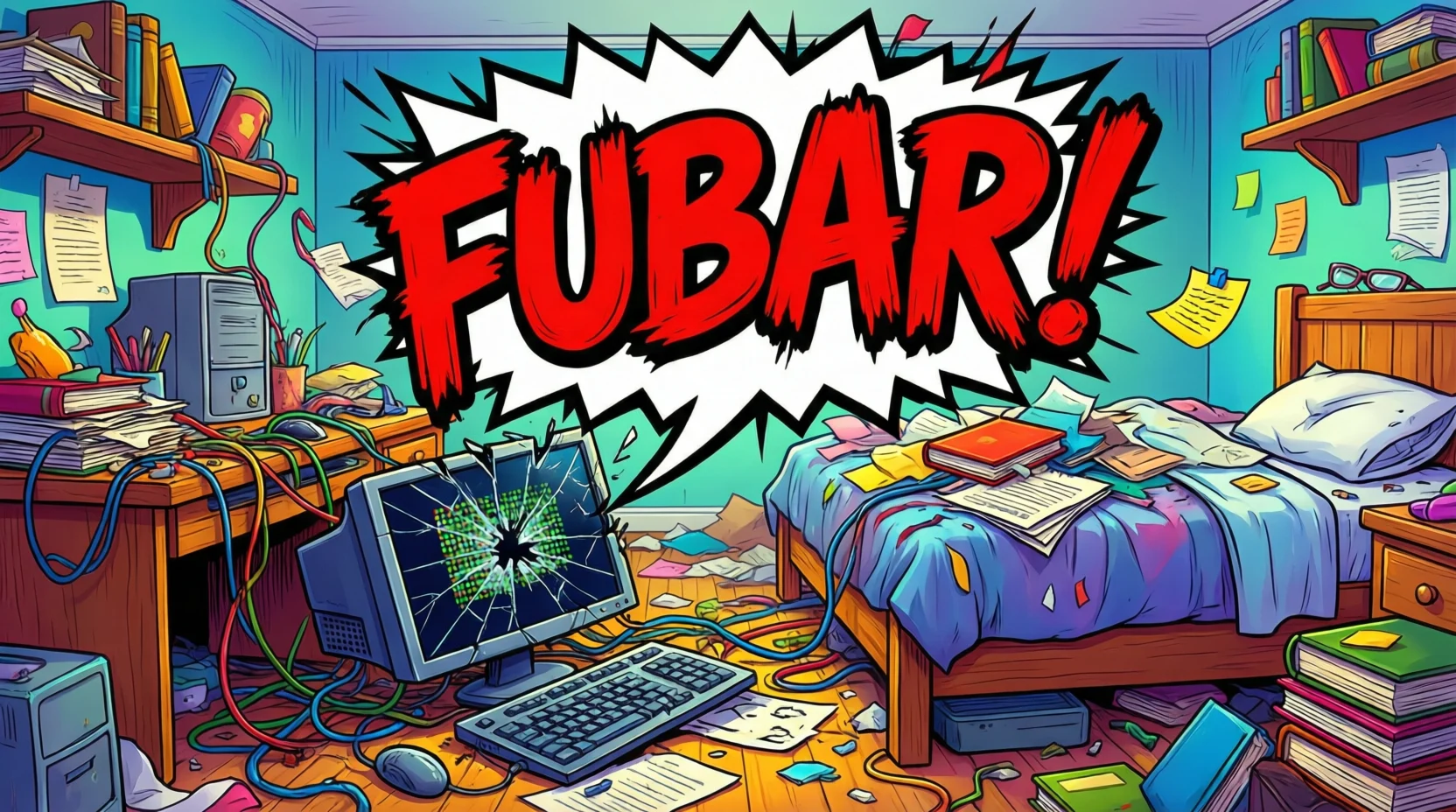
Have you ever heard someone say, “This is FUBAR”? Maybe it was in a movie, a video game, or even at work. But what does it really mean? Today, I will explain everything about FUBAR.
I will tell you what it means, where it came from, how people use it, and even some fun facts. By the end, you will know how to use it yourself.
What Does FUBAR Mean?
FUBAR is a word people use when something is completely messed up. It comes from an acronym, which is a word made from the first letters of other words. The original and strong version of FUBAR is:
“F*ed Up Beyond All Recognition.”**
A milder, cleaner version is:
“Fouled Up Beyond All Repair.”
Either way, it means something is broken, ruined, or completely chaotic.
Examples of FUBAR
Let me give you some examples so it makes sense:
- “The project is FUBAR after the computer crash.”
- “After the storm, the town was FUBAR.”
- “I tried to fix the car, but it is FUBAR now.”
See how it is used? Anything that goes really wrong can be called FUBAR. It is negative, but also kind of funny in casual conversation.
Where Did FUBAR Come From?
FUBAR started a long time ago. Soldiers in World War II in the United States first used it. During the war, things could go wrong very fast. Soldiers needed a short way to describe disaster. So they made acronyms like FUBAR.
Another famous acronym from the same time is SNAFU, which stands for “Situation Normal: All F*ed Up.”** Soldiers loved using these words to talk about problems quickly.
FUBAR in Movies and Pop Culture
After the war, FUBAR didn’t disappear. People started using it in movies, TV shows, and video games. For example:
- The 2002 Canadian comedy film FUBAR shows two friends dealing with funny disasters.
- Gamers sometimes use FUBAR when their plan fails in a game.
- Even memes online use FUBAR to describe disasters in a funny way.
FUBAR has moved from soldiers’ slang to everyday speech in pop culture.
Synonyms and Similar Words
FUBAR is not the only word to describe a messed-up situation. Here are some similar words and phrases:
- SNAFU – Another military acronym.
- Example: “The party was a SNAFU, but we laughed about it.”
- Screwed up – Simple and casual.
- Example: “I screwed up my homework again.”
- Ruined – Strong and simple.
- Example: “The cake is ruined; I burned it.”
- Broken beyond repair – Very clear and literal.
- Example: “The bike is broken beyond repair after the crash.”
These words are similar to FUBAR, but FUBAR is funny and dramatic.
When and How to Use FUBAR
FUBAR is informal. This means you should use it with friends, family, or in casual situations. You should not use it in formal writing or serious work emails.
Here are some tips:
- Casual speech: “Our homework is FUBAR, we forgot all the answers!”
- Pop culture reference: “The movie plot went FUBAR in the last scene.”
- Funny exaggeration: “My room is FUBAR; I can’t even see the floor!”
Using FUBAR makes your speech fun and dramatic. People will understand you mean something is completely messed up.
Fun Facts About FUBAR
- Alternative spelling: Some people spell it “Foobar” in tech or programming culture.
- Tech culture: Programmers sometimes use “foobar” as a placeholder name in coding examples.
- International use: People all over the world know FUBAR, not just Americans.
- Movies and games: FUBAR appears in many funny disaster stories.
These facts make FUBAR more interesting and show how it has spread far beyond the military.
Why FUBAR is Popular
FUBAR is popular because it is:
- Short and easy to say
- Funny and dramatic
- Clear about a disaster
Imagine you spill juice on a big stack of papers. Saying “It’s FUBAR!” is faster than explaining everything. It also makes the story more entertaining.
Examples of FUBAR in Everyday Life
Here are some real-life situations where you could use FUBAR:
- School: “My science project went FUBAR when the experiment exploded.”
- Home: “I tried to cook dinner, and it was FUBAR.”
- Work: “The report was FUBAR after the computer crashed.”
- Travel: “Our road trip went FUBAR when the car broke down.”
FUBAR works whenever things go completely wrong.
FUBAR and SNAFU: How They Are Different
Both FUBAR and SNAFU are military slang.
- FUBAR: Something is ruined beyond repair.
- SNAFU: Things are messed up, but it is normal or expected.
Example:
- FUBAR: “The house is FUBAR after the hurricane.”
- SNAFU: “The train was late again, just another SNAFU.”
Knowing the difference helps you sound smarter when using these acronyms.
Fun FUBAR Sayings
People sometimes make fun sayings with FUBAR:
- “If it can go wrong, it’s already FUBAR.”
- “FUBAR: The ultimate disaster word.”
- “Life is a little FUBAR sometimes, and that’s okay.”
These sayings make FUBAR playful. You can use them with friends to describe funny disasters.
Key Takeaways About FUBAR
- FUBAR means something is completely messed up.
- It started in World War II as soldiers’ slang.
- It is informal and works in casual speech, movies, and games.
- Synonyms include SNAFU, screwed up, ruined, and broken beyond repair.
- FUBAR is fun, dramatic, and easy to use when things go wrong.
Conclusion
Now you know all about FUBAR. It is a fun and dramatic word to describe disasters or things gone wrong. From its military roots to movies and memes, FUBAR has become part of everyday language. Remember, use it casually, have fun with it, and your friends will understand exactly what you mean when something goes FUBAR!
FAQs About FUBAR
1. What does FUBAR stand for?
- Full form: “F***ed Up Beyond All Recognition.”
- Clean version: “Fouled Up Beyond All Repair.”
2. Is FUBAR a bad word?
- Yes, the original form has a curse word. The clean version is safe.
3. Where did FUBAR come from?
- From U.S. soldiers in World War II, later popularized in movies, games, and slang.
4. Can I use FUBAR in school or work?
- Only in informal, casual situations. Avoid formal writing.

William Jones is an American author known for his clear, engaging, and reader-friendly writing style. He enjoys turning everyday ideas into meaningful stories that are easy to understand and enjoyable to read. His work often focuses on simple language, strong metaphors, and practical lessons that connect directly with readers.
With a passion for storytelling, William believes that good writing doesn’t need to be complicated to be powerful. He aims to make ideas feel familiar, relatable, and memorable. Whether he’s explaining a concept, sharing a story, or exploring human behavior, his goal is always clarity and connection.
When he’s not writing, William enjoys reading classic literature, observing everyday life for inspiration, and helping readers see common things in a new way.