I remember a time when anxiety felt like it was running my life. My thoughts would start racing the moment I woke up. I tried everything to calm myself down.
I argued with my mind. I pushed the fear away. But the harder I fought anxiety, the stronger it became. That’s when I realized the problem wasn’t anxiety itself it was the way I was dealing with it.
When I discovered Acceptance and Commitment Therapy, or ACT, my perspective changed. ACT didn’t teach me how to eliminate anxious thoughts. It taught me how to understand them.
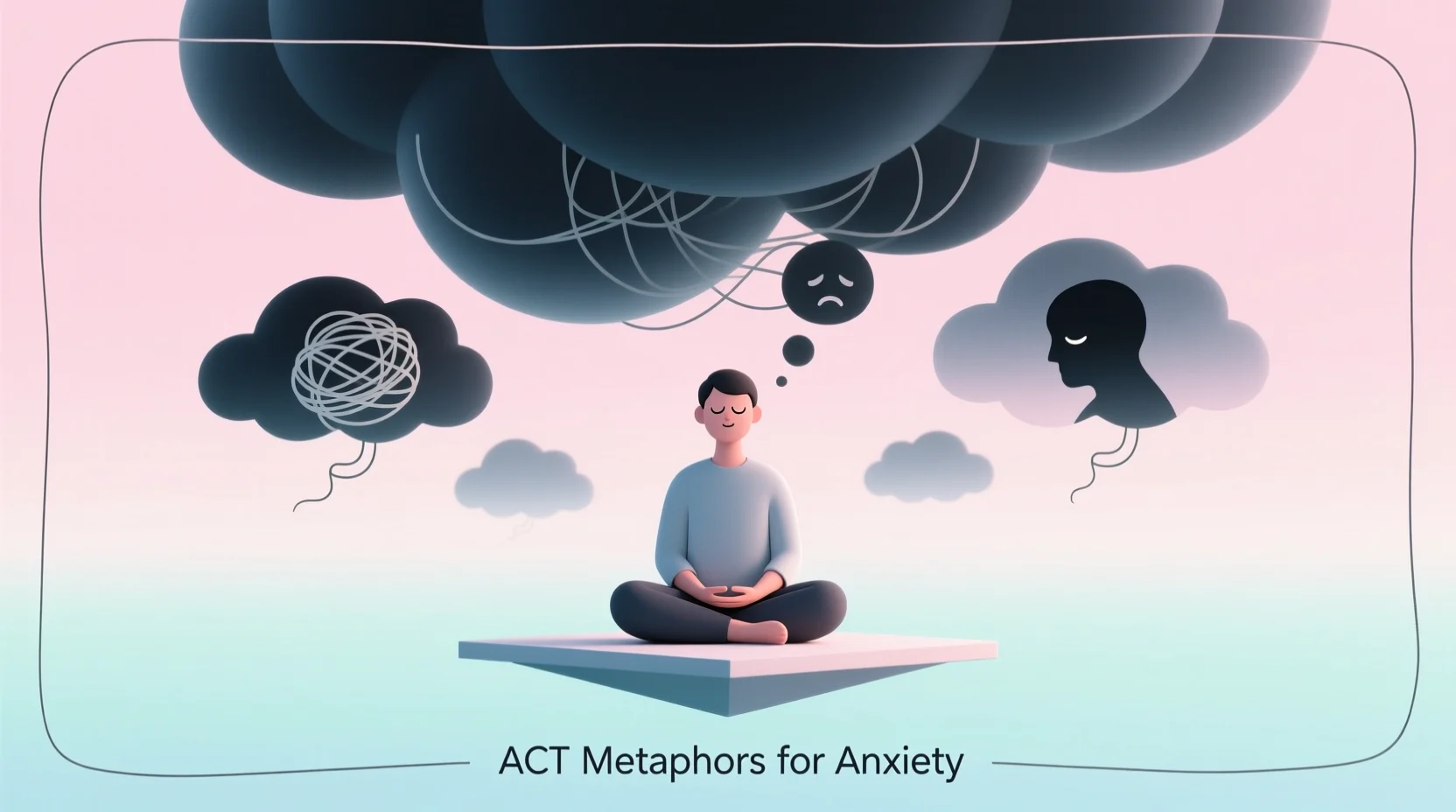
Through simple metaphors, I learned to step back and observe my thoughts instead of getting trapped inside them. I stopped treating every anxious thought like a fact.
Anxiety didn’t vanish overnight. But I learned how to move forward with it, without letting it control my choices. And that shift gave me real relief.
1. Anxiety Is a Tug-of-War with a Monster
Metaphor (in use):
I realized my anxiety felt like a tug-of-war with a monster over a deep pit.
Meaning:
Fighting anxiety keeps you stuck.
Explanation:
The harder you pull, the harder anxiety pulls back. Dropping the rope creates freedom.
Examples:
- I stopped pulling on the rope, and the monster lost power.
- Fighting my thoughts only dragged me closer to the pit.
2. Anxiety Is Quicksand
Metaphor:
My anxiety felt like quicksand the more I struggled.
Meaning:
Struggle makes anxiety worse.
Explanation:
Trying to escape panic forcefully pulls you deeper.
Examples:
- When I relaxed, the quicksand loosened.
- Panic grew when I fought it.
3. Thoughts Are Passing Clouds
Metaphor:
I watched my anxious thoughts float by like clouds.
Meaning:
Thoughts are temporary.
Explanation:
You don’t have to chase or stop them.
Examples:
- The cloud passed without me touching it.
- I let the sky stay open.
4. Anxiety Is a Radio Playing in the Background
Metaphor:
Anxiety was like a noisy radio I didn’t have to obey.
Meaning:
You can act even when anxiety talks.
Explanation:
You hear it, but you don’t follow it.
Examples:
- I kept walking while the radio played.
- The volume didn’t control me.
5. The Mind Is an Overprotective Alarm
Metaphor:
My mind acted like a smoke alarm going off while I cooked toast.
Meaning:
Anxiety exaggerates danger.
Explanation:
The alarm means well but isn’t always accurate.
Examples:
- The alarm screamed, but there was no fire.
- I thanked it and kept cooking.
6. Anxiety Is a Wave
Metaphor:
I rode the wave instead of running from it.
Meaning:
Anxiety rises and falls naturally.
Explanation:
If you don’t fight it, it passes.
Examples:
- The wave peaked and faded.
- I stayed afloat by breathing.
7. Thoughts Are Leaves on a Stream
Metaphor:
I placed my anxious thoughts on leaves floating away.
Meaning:
You can observe thoughts without engaging.
Explanation:
Let them drift instead of grabbing them.
Examples:
- The leaf disappeared downstream.
- I stayed on the bank.
8. Anxiety Is a Backseat Driver
Metaphor:
Anxiety yelled directions while I stayed in the driver’s seat.
Meaning:
You choose actions, not anxiety.
Explanation:
Anxiety talks, but you steer.
Examples:
- I drove toward my values.
- The shouting didn’t stop me.
9. The Mind Is a Storytelling Machine
Metaphor:
My mind kept telling scary stories.
Meaning:
Thoughts are narratives, not facts.
Explanation:
You can notice the story without believing it.
Examples:
- I named it “The Worry Story.”
- I didn’t buy the plot.
10. Anxiety Is an Uninvited Guest
Metaphor:
I let anxiety sit in the room without hosting it.
Meaning:
You can allow anxiety without engaging.
Explanation:
You don’t have to kick it out or entertain it.
Examples:
- Anxiety stayed quiet eventually.
- I kept living.
11. Thoughts Are Pop-Up Ads
Metaphor:
My mind threw pop-up ads all day long.
Meaning:
Thoughts interrupt, but you don’t have to click.
Explanation:
Notice and close them mentally.
Examples:
- I closed the ad and continued.
- The page still worked.
12. Anxiety Is a Heavy Backpack
Metaphor:
I carried anxiety like a backpack instead of dropping my journey.
Meaning:
You can move forward with discomfort.
Explanation:
The weight doesn’t stop progress.
Examples:
- I walked despite the load.
- My goal mattered more.
13. Thoughts Are Passing Trains
Metaphor:
I watched anxious trains pass without boarding.
Meaning:
You don’t have to follow every thought.
Explanation:
Let them go by.
Examples:
- The train left the station.
- I stayed grounded.
14. Anxiety Is Weather, Not the Sky
Metaphor:
Anxiety was a storm, not who I am.
Meaning:
Feelings don’t define identity.
Explanation:
You are the sky that holds it.
Examples:
- The storm passed.
- The sky remained.
15. The Mind Is a Guard Dog
Metaphor:
My mind barked at every stranger.
Meaning:
Anxiety tries to protect you.
Explanation:
It doesn’t know when to relax.
Examples:
- I patted the dog calmly.
- I didn’t run.
16. Anxiety Is a Broken Compass
Metaphor:
I stopped letting anxiety choose my direction.
Meaning:
Fear distorts decisions.
Explanation:
Values guide better than fear.
Examples:
- I followed my values.
- The compass spun wildly.
17. Thoughts Are Echoes
Metaphor:
My anxious thoughts echoed longer than they mattered.
Meaning:
Thoughts linger but lose power.
Explanation:
Don’t shout back.
Examples:
- The echo faded.
- Silence returned.
18. Anxiety Is a Speed Bump
Metaphor:
Anxiety slowed me, not stopped me.
Meaning:
Discomfort doesn’t mean failure.
Explanation:
Pause, then continue.
Examples:
- I slowed and kept moving.
- The road stayed open.
19. Thoughts Are Sticky Notes
Metaphor:
My mind stuck warnings everywhere.
Meaning:
Thoughts attach, not command.
Explanation:
You can peel them off gently.
Examples:
- I removed the note.
- The wall stayed fine.
20. Anxiety Is a Shadow
Metaphor:
Anxiety followed me when I moved toward the light.
Meaning:
Avoidance feeds fear.
Explanation:
Move forward anyway.
Examples:
- The shadow shrank.
- The light grew.
Practical ACT Exercise: 10 Questions & Answers
1. What am I feeling right now?
→ Anxiety, not danger.
2. What metaphor fits this moment?
→ Wave or backseat driver.
3. Am I fighting or allowing?
→ I’m learning to allow.
4. What is my mind saying?
→ A scary story.
5. Is this thought a fact?
→ No, just a thought.
6. Can I observe it instead?
→ Yes.
7. What value matters here?
→ Courage or growth.
8. Can I move with discomfort?
→ Yes.
9. What small step can I take?
→ One breath or action.
10. What happens if I don’t obey anxiety?
→ Freedom increases.
Conclusion
If there’s one thing I want you to remember, it’s this:
Anxiety doesn’t need to disappear for your life to begin.ACT metaphors give us a gentle way to step back, observe, and choose what truly matters. You don’t win by fighting anxiety. You win by living alongside it without letting it decide your path.

William Jones is an American author known for his clear, engaging, and reader-friendly writing style. He enjoys turning everyday ideas into meaningful stories that are easy to understand and enjoyable to read. His work often focuses on simple language, strong metaphors, and practical lessons that connect directly with readers.
With a passion for storytelling, William believes that good writing doesn’t need to be complicated to be powerful. He aims to make ideas feel familiar, relatable, and memorable. Whether he’s explaining a concept, sharing a story, or exploring human behavior, his goal is always clarity and connection.
When he’s not writing, William enjoys reading classic literature, observing everyday life for inspiration, and helping readers see common things in a new way.